Fake Job Detector
LiveA probabilistic authenticity score, not a binary real/fake flag — shipped in 5 days.
Lead with: The probabilistic scoring approach, versus a binary real/fake classification.
The technical problem
LinkedIn's job feed carries a meaningful share of fraudulent or low-quality listings — fake recruiters, data-harvesting "applications," and roles that don't exist. A binary real/fake label is overconfident on inherently ambiguous signals; job seekers needed a way to gauge risk before they applied, not a false guarantee.
Architecture / stack
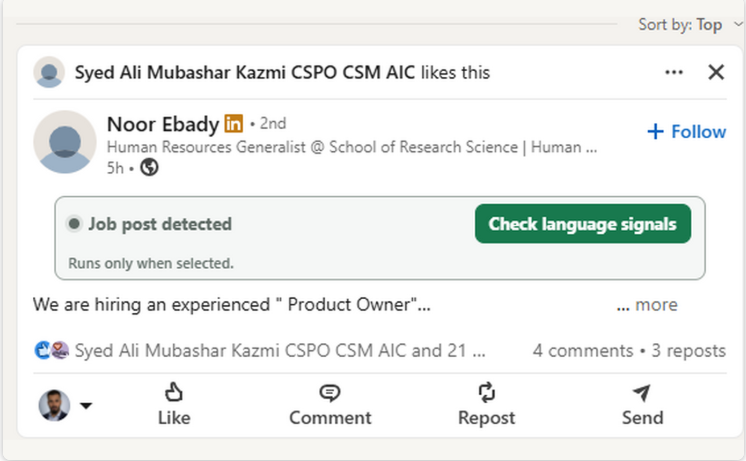
A Chrome extension scrapes LinkedIn's feed and individual job posts client-side, extracts a set of authenticity signals from each listing, and renders a scored banner directly on the page — no server round-trip required for the core scoring loop.
The interesting decision
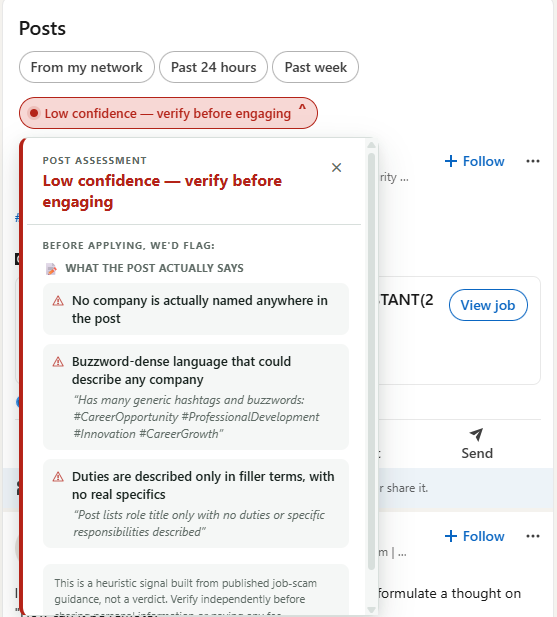
Scoring is probabilistic — a weighted confidence score across multiple signals — rather than a binary real/fake flag, because the underlying signals are genuinely ambiguous and a false-confidence binary label would be worse than a calibrated "be cautious" score. The entire extension was built inside a 5-day MVP constraint, which shaped the decision to keep scoring client-side and signal-based rather than reaching for a hosted ML model.
What shipped
An in-feed banner flagging suspect listings, an expandable output card showing the score, and a detailed signal breakdown for anyone who wants to see why a listing was flagged.